Upcoming Events
Upcoming and past webinars and livestreams
Coming up next
Choosing Fit-for-Purpose Maintenance Tactics
Choosing a maintenance tactic by gut feel or "how we've always done it" is how good budgets fund the wrong fixes. Session 5 breaks down how asset behaviour — static vs. dynamic — and specific failure mechanisms should actually govern your tactic selection. Move away from personal preference and adopt objective decision triggers for Reliability Centred Maintenance (RCM), Preventive Maintenance Optimization (PMO), Risk-Based Inspection (RBI), Condition-Based Maintenance (CBM), or Root Cause Analysis (RCA) — and know exactly why you chose each one. Series Details: Part 5 of an 8-Part Executive Learning Series Session Number: Session 5 of 8 Duration: 2 Hours (Discussion-led, including interactive Q&A) By the end of this session, you'll be able to: Differentiate maintenance approaches for static containment assets versus dynamic functional machinery. Apply objective decision triggers to select confidently between RCM, PMO, RBI, RCA, and CBM. This session is CPD Validated, live or on demand. A certificate is issued on completion.
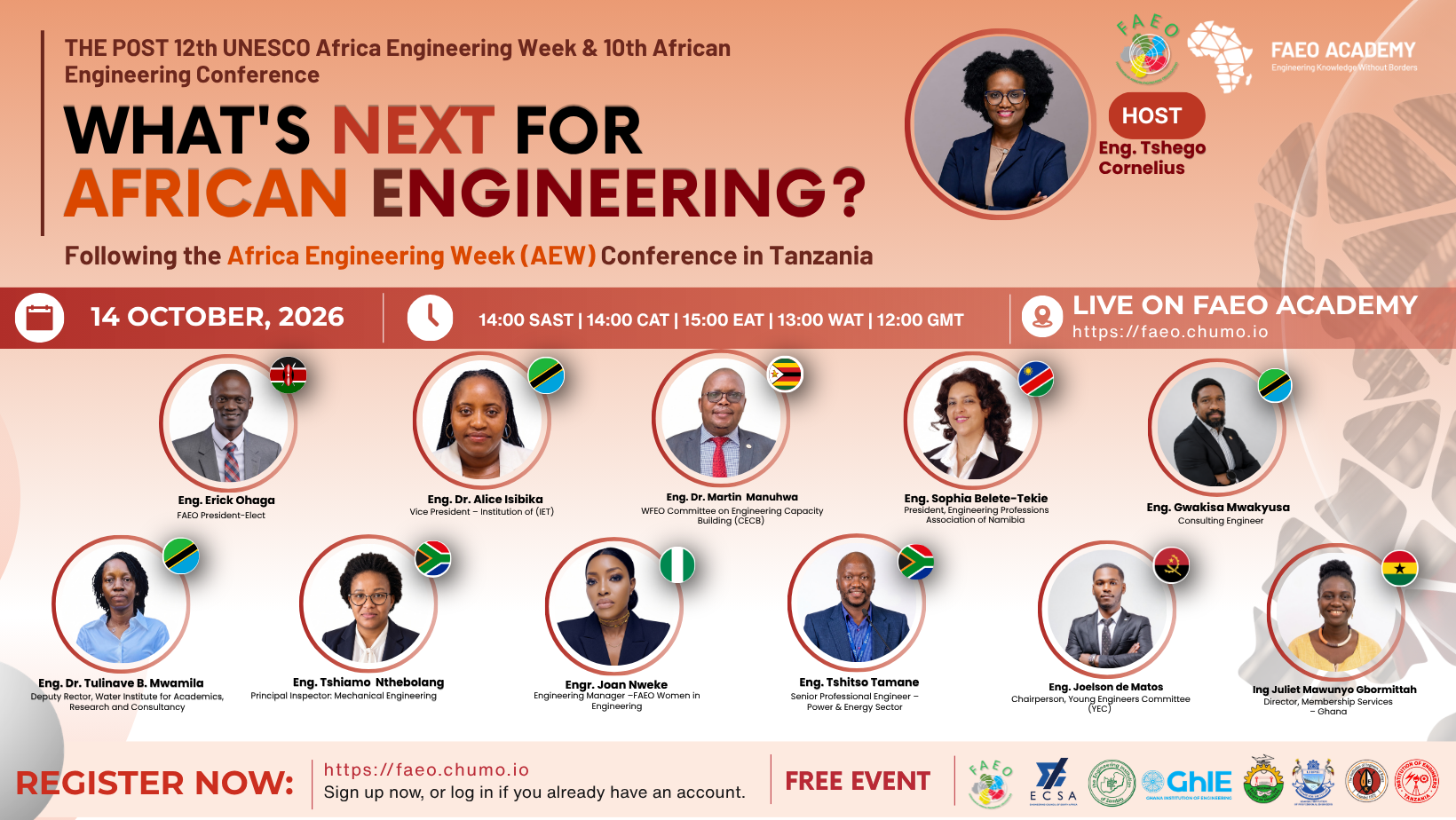
THE POST 12th UNESCO Africa Engineering Week & 10th African Engineering Conference
WHAT'S NEXT FOR AFRICAN ENGINEERING?
ISO 55001:2024 — Leadership
Your asset management system isn't failing because of the SCADA platform. A decade of ISO 55001 implementations points to one variable above all others: leadership. Every requirement in Clause 5 opens with the same two words — top management shall. The repetition is deliberate. Engineers and maintenance teams can support an asset management system; they cannot own it. Where ownership is unclear, the policy sits on a shelf, the asset register stays incomplete for want of people to maintain it, and a plant manager carries responsibility with no authority to act on it. Session 2 takes Clause 5 apart. It covers the ten leadership obligations of 5.1 and what genuine commitment looks like in evidence rather than intent; the five requirements of an asset management policy under 5.2, with a side-by-side of a policy that anchors to nothing versus one that names its purpose, its legislation and its licence conditions; and the responsibility / authority / accountability distinction under 5.3, including the two assignments top management must formally make to named individuals. It closes by tracing a single unbroken line of sight from a boardroom commitment to a contractor arriving on site in 90 minutes. Series Details: Part 2 of a 5-Part ISO 55001:2024 Series Session Number: Session 2 of 5 Duration: 2 Hours (Facilitated workshop with case studies, including interactive Q&A) By the end of this session, you'll be able to: Explain why Clause 5 places accountability for the AMS with top management, and describe the ten leadership obligations it imposes. Test an asset management policy against the five requirements of Clause 5.2 — and judge whether it is actually known in the field or only on file. Distinguish responsibility, authority and accountability under Clause 5.3, and make the two mandatory assignments without creating the most common governance failure. Facilitated by a certified ISO 55001 Lead Auditor. This session is CPD Validated, live or on demand. A certificate is issued on completion.
Measuring Performance and Proving Value
All-green dashboards and declining asset availability can — and often do — coexist. If your compliance metrics look great but service keeps slipping, you're measuring the wrong things. Session 6 closes that gap. Build an unbroken line of sight from customer demand all the way down to individual asset performance, using standard formulas for Availability, MTBF, OEE, and Quality — backed by drill-down capability that tells you exactly which asset is costing you the most. Series Details: Part 6 of an 8-Part Executive Learning Series Session Number: Session 6 of 8 Duration: 2 Hours (Discussion-led, including interactive Q&A) By the end of this session, you'll be able to: Calculate and interpret the core operational KPIs that matter: Availability, Reliability (MTBF), Performance rate, and Quality. Balance leading indicators (planning and readiness) against lagging outcomes (downtime and missed demand). Drill down from company-wide shortfall figures straight to the specific asset behind them, by unique asset ID. This session is CPD Validated, live or on demand. A certificate is issued on completion.
Continuous Improvement Through Learning
Every failure teaches you something — if you're actually built to learn from it, instead of just closing the ticket and moving on. Session 7 shows you how to systematically close the learning loop after equipment failures, warning signs, or completed maintenance work. Apply the right RCA triggers, categorize failure modes consistently across your fleet, and make sure work orders only get closed once the fix is verified to actually work. Series Details: Part 7 of an 8-Part Executive Learning Series Session Number: Session 7 of 8 Duration: 2 Hours (Discussion-led, including interactive Q&A) By the end of this session, you'll be able to: Apply risk-proportional RCA triggers to know instantly when a failure needs deep investigation versus a quick team review. Standardize failure categorization to uncover the systemic loss patterns hiding across your asset fleet. Verify that completed work genuinely restores required capacity and prevents recurrence before you close it out. This session is CPD Validated, live or on demand. A certificate is issued on completion.
Governing Reliability as a Management System
Seven sessions of insight are only worth something if leadership can actually run them as a system — not seven separate initiatives competing for the same budget. The final session brings every building block from Sessions 1–7 together into one executive management system. Learn how to run a decision-focused review, structure an 8-view management report, establish clear cross-functional accountability, and put AI to work on top of a trusted evidence foundation — so your organization keeps every promise it makes to the people it serves. Series Details: Part 8 of an 8-Part Executive Learning Series Session Number: Session 8 of 8 Duration: 2 Hours (Discussion-led, including interactive Q&A) By the end of this session, you'll be able to: Integrate all 8 transformation building blocks into a single governed reliability management system. Structure an executive decision-focused report that traces customer demand all the way down to accountable asset owners. Evaluate your organization's AI readiness and deploy automated analytics responsibly, without sacrificing human judgment. This session is CPD Validated, live or on demand. A certificate is issued on completion.
Manufacturing & Industrial Systems
Choosing Fit-for-Purpose Maintenance Tactics
Choosing a maintenance tactic by gut feel or "how we've always done it" is how good budgets fund the wrong fixes. Session 5 breaks down how asset behaviour — static vs. dynamic — and specific failure mechanisms should actually govern your tactic selection. Move away from personal preference and adopt objective decision triggers for Reliability Centred Maintenance (RCM), Preventive Maintenance Optimization (PMO), Risk-Based Inspection (RBI), Condition-Based Maintenance (CBM), or Root Cause Analysis (RCA) — and know exactly why you chose each one. Series Details: Part 5 of an 8-Part Executive Learning Series Session Number: Session 5 of 8 Duration: 2 Hours (Discussion-led, including interactive Q&A) By the end of this session, you'll be able to: Differentiate maintenance approaches for static containment assets versus dynamic functional machinery. Apply objective decision triggers to select confidently between RCM, PMO, RBI, RCA, and CBM. This session is CPD Validated, live or on demand. A certificate is issued on completion.
Measuring Performance and Proving Value
All-green dashboards and declining asset availability can — and often do — coexist. If your compliance metrics look great but service keeps slipping, you're measuring the wrong things. Session 6 closes that gap. Build an unbroken line of sight from customer demand all the way down to individual asset performance, using standard formulas for Availability, MTBF, OEE, and Quality — backed by drill-down capability that tells you exactly which asset is costing you the most. Series Details: Part 6 of an 8-Part Executive Learning Series Session Number: Session 6 of 8 Duration: 2 Hours (Discussion-led, including interactive Q&A) By the end of this session, you'll be able to: Calculate and interpret the core operational KPIs that matter: Availability, Reliability (MTBF), Performance rate, and Quality. Balance leading indicators (planning and readiness) against lagging outcomes (downtime and missed demand). Drill down from company-wide shortfall figures straight to the specific asset behind them, by unique asset ID. This session is CPD Validated, live or on demand. A certificate is issued on completion.
Continuous Improvement Through Learning
Every failure teaches you something — if you're actually built to learn from it, instead of just closing the ticket and moving on. Session 7 shows you how to systematically close the learning loop after equipment failures, warning signs, or completed maintenance work. Apply the right RCA triggers, categorize failure modes consistently across your fleet, and make sure work orders only get closed once the fix is verified to actually work. Series Details: Part 7 of an 8-Part Executive Learning Series Session Number: Session 7 of 8 Duration: 2 Hours (Discussion-led, including interactive Q&A) By the end of this session, you'll be able to: Apply risk-proportional RCA triggers to know instantly when a failure needs deep investigation versus a quick team review. Standardize failure categorization to uncover the systemic loss patterns hiding across your asset fleet. Verify that completed work genuinely restores required capacity and prevents recurrence before you close it out. This session is CPD Validated, live or on demand. A certificate is issued on completion.
Governing Reliability as a Management System
Seven sessions of insight are only worth something if leadership can actually run them as a system — not seven separate initiatives competing for the same budget. The final session brings every building block from Sessions 1–7 together into one executive management system. Learn how to run a decision-focused review, structure an 8-view management report, establish clear cross-functional accountability, and put AI to work on top of a trusted evidence foundation — so your organization keeps every promise it makes to the people it serves. Series Details: Part 8 of an 8-Part Executive Learning Series Session Number: Session 8 of 8 Duration: 2 Hours (Discussion-led, including interactive Q&A) By the end of this session, you'll be able to: Integrate all 8 transformation building blocks into a single governed reliability management system. Structure an executive decision-focused report that traces customer demand all the way down to accountable asset owners. Evaluate your organization's AI readiness and deploy automated analytics responsibly, without sacrificing human judgment. This session is CPD Validated, live or on demand. A certificate is issued on completion.
Professional Practice, Ethics & Compliance
ISO 55001:2024 — Leadership
Your asset management system isn't failing because of the SCADA platform. A decade of ISO 55001 implementations points to one variable above all others: leadership. Every requirement in Clause 5 opens with the same two words — top management shall. The repetition is deliberate. Engineers and maintenance teams can support an asset management system; they cannot own it. Where ownership is unclear, the policy sits on a shelf, the asset register stays incomplete for want of people to maintain it, and a plant manager carries responsibility with no authority to act on it. Session 2 takes Clause 5 apart. It covers the ten leadership obligations of 5.1 and what genuine commitment looks like in evidence rather than intent; the five requirements of an asset management policy under 5.2, with a side-by-side of a policy that anchors to nothing versus one that names its purpose, its legislation and its licence conditions; and the responsibility / authority / accountability distinction under 5.3, including the two assignments top management must formally make to named individuals. It closes by tracing a single unbroken line of sight from a boardroom commitment to a contractor arriving on site in 90 minutes. Series Details: Part 2 of a 5-Part ISO 55001:2024 Series Session Number: Session 2 of 5 Duration: 2 Hours (Facilitated workshop with case studies, including interactive Q&A) By the end of this session, you'll be able to: Explain why Clause 5 places accountability for the AMS with top management, and describe the ten leadership obligations it imposes. Test an asset management policy against the five requirements of Clause 5.2 — and judge whether it is actually known in the field or only on file. Distinguish responsibility, authority and accountability under Clause 5.3, and make the two mandatory assignments without creating the most common governance failure. Facilitated by a certified ISO 55001 Lead Auditor. This session is CPD Validated, live or on demand. A certificate is issued on completion.
Leadership, Management & Business
THE POST 12th UNESCO Africa Engineering Week & 10th African Engineering Conference
WHAT'S NEXT FOR AFRICAN ENGINEERING?
Past Events

Engineering Workplace Readiness, Session 2: Technical Communication as an Engineering Competency
Your calculations were perfect. Your handover wasn't. In engineering, technical competence doesn't end with getting the numbers right. It ends when the right information reaches the right person, in a form they can act on. A vibration noticed but never recorded, a reading described as "a little high", a pump reported as "broken" with no asset number, time or measurement: these are the small gaps that turn into downtime, rework, damaged equipment and safety incidents. Most technical failures begin as communication failures in disguise. Session 2 of the Engineering Workplace Readiness Masterclass treats communication as an engineered system, with inputs, channels, noise and feedback loops that can be designed, tested and improved. Through real operational scenarios, from shift handovers and fault reports to escalation emails and control room conversations, this session shows how to move information accurately from observation to action. You will learn to replace vague language with communication that is specific, measurable, time bound and owned. You will learn to separate evidence from interpretation, so decisions rest on verified facts rather than assumptions. You will learn to write fault reports that become defensible operational records, and to use closed loop verbal protocols so critical instructions survive high pressure situations. The session also covers how to choose the right channel based on urgency, complexity, risk and traceability, and how to tailor one message for operators, engineers, managers and regulators without changing the facts. We close with a practical professional communication checklist you can apply on your next shift, report or site meeting. Because sending the message is not the finish line. Shared understanding is. This masterclass is built for graduates entering the workplace, as well as technicians, technologists and engineers across all disciplines who want their communication to be as reliable as their technical work. Duration: 2 hours, including Q&A CPD: 0.2 CPD points, ECSA CPD Validated
Courageous Leadership
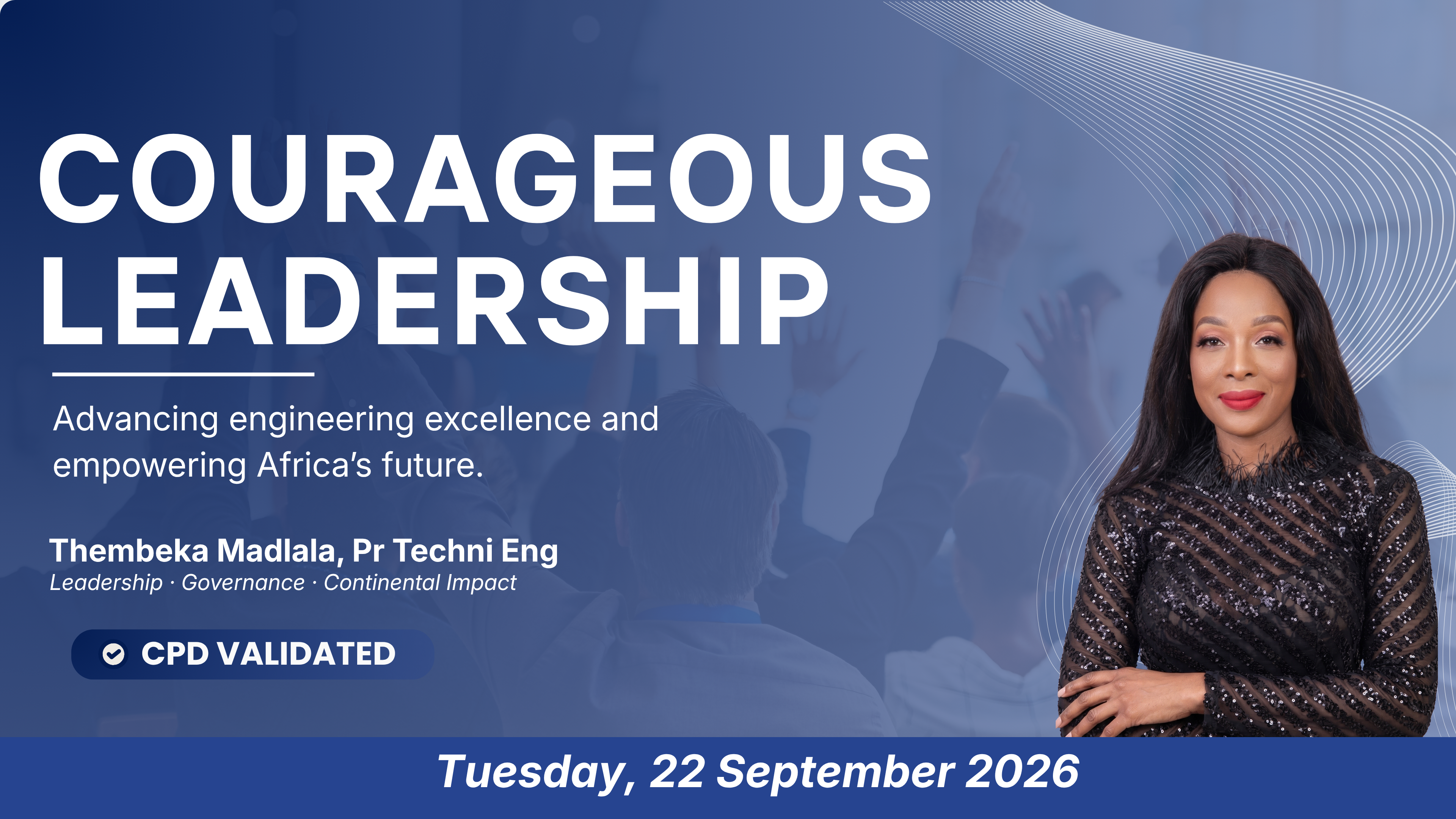
Advancing engineering excellence and empowering Africa’s future.

Africa Engineering Gala Dinner & Partner Recognition Night | 12th UNESCO Africa Engineering Week & 10th African Engineering Conference — Live from Dar es Salaam
The Africa Engineering Gala Dinner & Partner Recognition Night closes the 12th UNESCO Africa Engineering Week & 10th African Engineering Conference in Dar es Salaam. After a week of high-level plenaries, technical paper sessions across climate-resilient infrastructure, water and environment, digital transformation, energy transition, gender and youth innovation and engineering education, plus the Innovation & Exhibition Showcase, delegates gather for the formal recognition of the platinum, gold and strategic partners, sponsors and organising committee whose support made the conference possible. The evening brings together engineering leaders, regulators, ministers, institute presidents and delegates from across Africa and beyond, hosted by the Institution of Engineers Tanzania in partnership with the Federation of African Engineering Organisations, UNESCO, WFEO and the African Union. Broadcast live and free to watch from anywhere. Date: Wednesday, 16 September 2026 Time: 18:00 EAT | 17:00 CAT | 16:00 WAT | 15:00 GMT
Building the Asset, Information & Criticality Foundation
If your maintenance team, your finance team, and your engineers all describe the same asset differently, you don't have a data problem — you have a language problem, and it's costing you every time a decision gets made on bad information. Session 3 shows you how to build one shared asset language across your organization. Learn how to construct a functional asset hierarchy, define the minimum credible asset record, and apply criticality scoring so your scarcest resources — money, people, and analytical time — go to the risks that actually threaten service delivery. Series Details: Part 3 of an 8-Part Executive Learning Series Session Number: Session 3 of 8 Duration: 2 Hours (Discussion-led, including interactive Q&A) By the end of this session, you'll be able to: Build a functional asset hierarchy that connects service areas, systems, assets, and components in one traceable structure. Set decision-quality data standards and establish a "golden thread" of asset information your leadership team can trust. Use Portfolio Criticality Analysis (PCA) to direct analytical rigour where risk exposure is genuinely highest. This session is CPD Validated, live or on demand. A certificate is issued on completion.
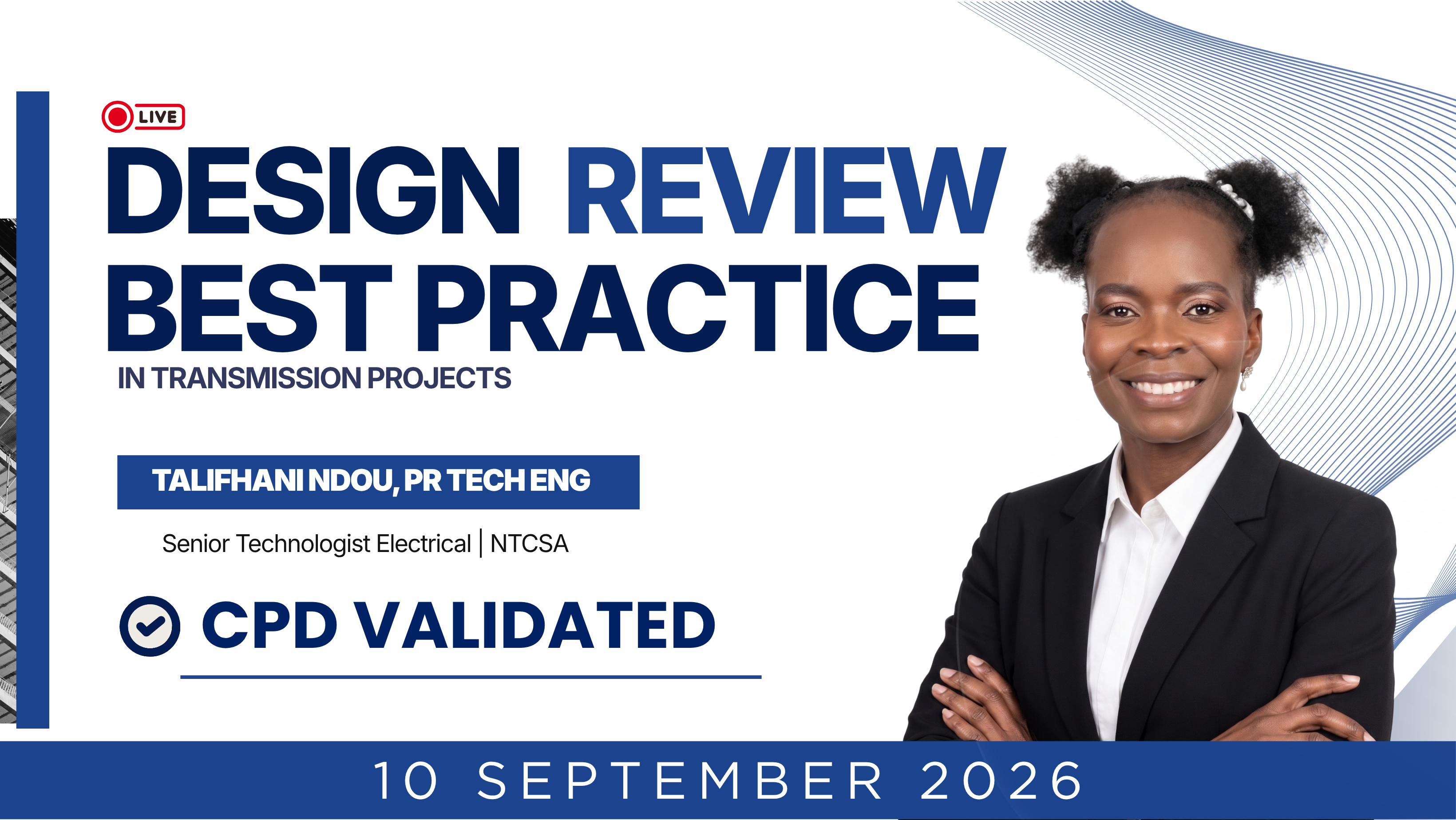
Design Review Best Practices
Join us LIVE for an insightful technical session on Design Review Best Practice in Transmission Projects, presented by Talifhani Ndou, Pr Tech Eng (Senior Technologist Electrical, NTCSA).
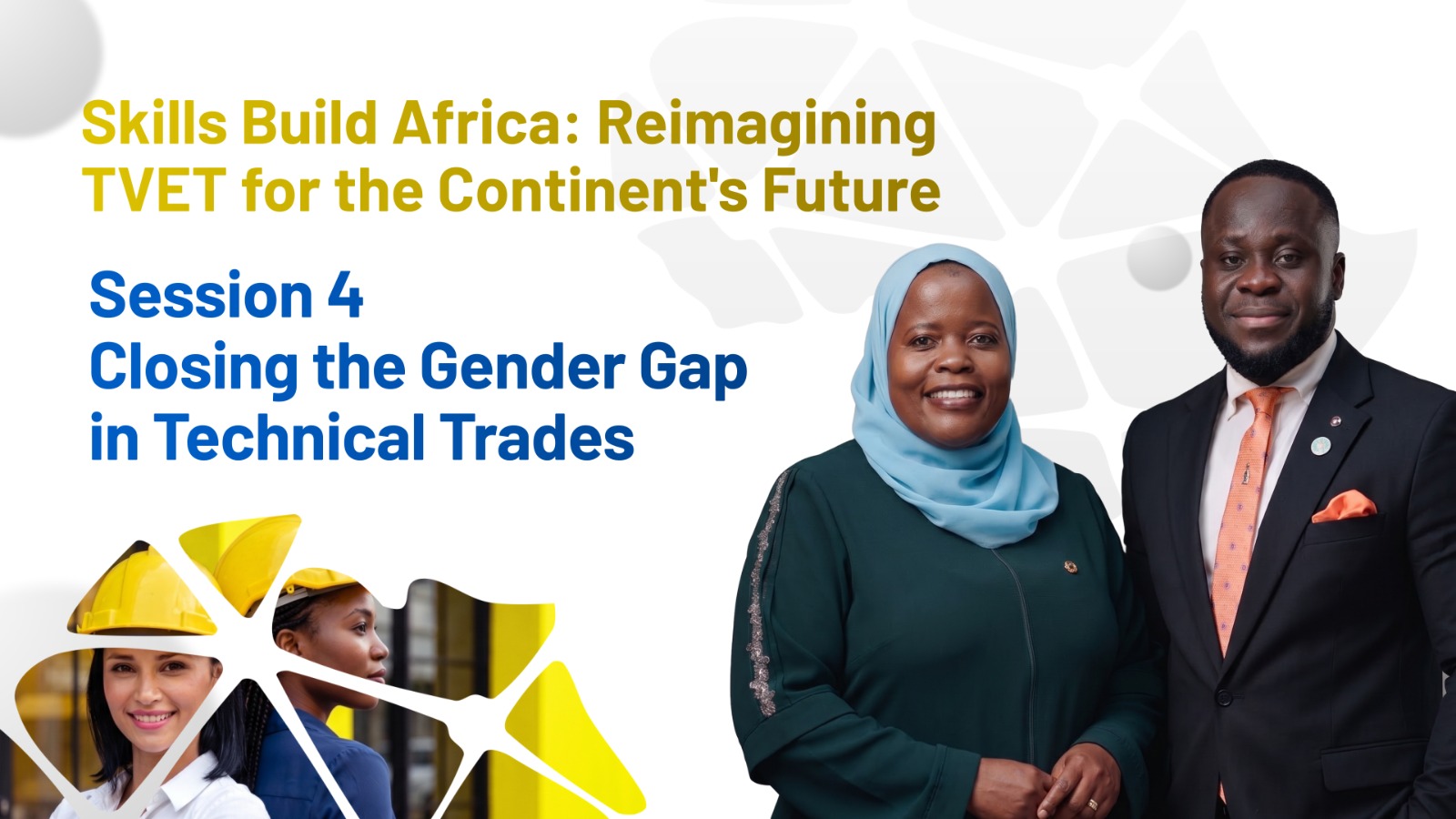
Skills Build Africa: Reimagining TVET for the Continent's Future — Session 4: Closing the Gender Gap in Technical Trades
Session 4: Closing the Gender Gap in Technical Trades Moderated by Ing. Bismark Otoo, MEng, BSc, GhIE — Air Traffic Safety Engineer, Ghana Civil Aviation Authority. Speaker: Ms. Nakakande Hadijah — Technical Principal, TVET Expert and Champion for Green Skills, Youth Development and Women's Empowerment. Technical trades remain among the most male-dominated fields on the continent, and the same barriers keep rural youth and persons with disabilities out of the workshop. This session looks at what actually shifts participation, from recruitment and workshop culture to retention and placement, and what training institutions can put in place now. 8 September 2026, 2:00PM (GMT) · 4:00PM (SAST) · 3:00PM (WAT) · 5:00PM (EAT). Duration: 90 minutes.
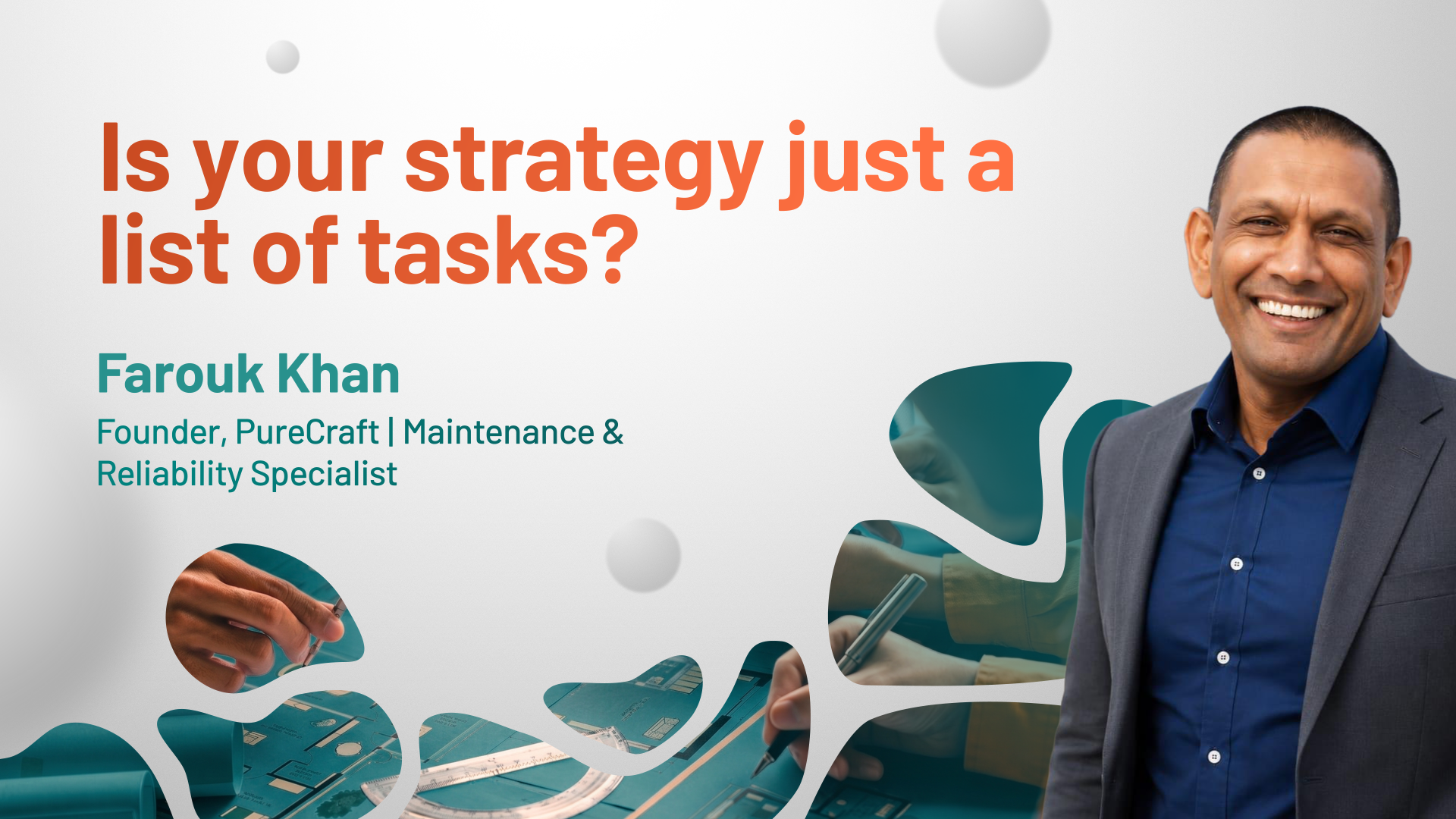
Developing the Maintenance & Reliability Transformation Strategy
Strategy without structure is just an opinion with a deadline. Session 2 takes the reliability mandate from Session 1 and converts it into decisions you can actually govern. Get a step-by-step roadmap to frame your service obligations, manage system risk across departments that rarely talk to each other, select the analytical pathway that actually fits your assets, and launch a targeted 90-day transformation move your board will notice. Series Details: Part 2 of an 8-Part Executive Learning Series Session Number: Session 2 of 8 Duration: 2 Hours (Discussion-led, including interactive Q&A) By the end of this session, you'll be able to: Align what you promise customers with what your assets can actually deliver — and where you're willing to accept loss. Choose the right decision pathway (RCM, PMO, RBI, RCA) by evaluating static vs. dynamic asset behaviour, not personal preference. Structure clear cross-functional governance and launch a high-impact 90-day strategic reliability commitment. This session is CPD Validated, live or on demand. A certificate is issued on completion.

Engineering Workplace Readiness: Professional Conduct & Communication
A qualification proves you can do the work. It doesn't prove you can be trusted to do it. Every engineering organisation has technically excellent people who are operationally dangerous — the technician who conceals a mistake to avoid blame, the supervisor who signs an inspection record for work they never witnessed, the team that has normalised a shortcut because nothing has gone wrong yet. None of that is a skills gap. It's the gap between holding a technical qualification and practising as a professional, and it's where service delivery, safety and public trust are actually lost. Session 1 works that gap directly. It separates technical competence from professional workplace competence, marks where compliance ends and ethics begins, and sets out the three pillars of ethical decision-making — duty, consequence and character. It then takes on the uncomfortable reality that good people make mistakes inside badly designed systems: the Swiss cheese model of causation, the normalisation of deviance, and a just-culture matrix that separates human error from at-risk behaviour, reckless behaviour and deliberate misconduct — each with a different correct response. The second half turns principle into protocol: raising a concern with professional language templates, filtering an unclear or unsafe instruction, reporting a mistake, closed-loop communication, shift handover, confidentiality, the boundaries of your own competence, psychological safety, and stop-work authority. Two full incident case studies — pressure to bypass, and the normalised shortcut — plus six live audience votes run throughout. Session 1 — Building a Future-Ready Technical Workforce Series Duration: 120 Minutes (including interactive Q&A and live polling) By the end of this session, you'll be able to: Distinguish technical competence from professional workplace competence, and explain why a qualification grants entry while conduct determines whether the work can be trusted. Classify a workplace behaviour under a just-culture framework — human error, at-risk, reckless, deliberate — and apply the correct system response rather than defaulting to blame. Raise a concern, decline an unsafe instruction, report your own mistake and hand over a shift using professional language and closed-loop protocols that hold up under operational pressure. Presented by a senior learning and development practitioner in the water sector — registered HR professional, assessor and moderator. This session is CPD Validated, live or on demand. A certificate is issued on completion.
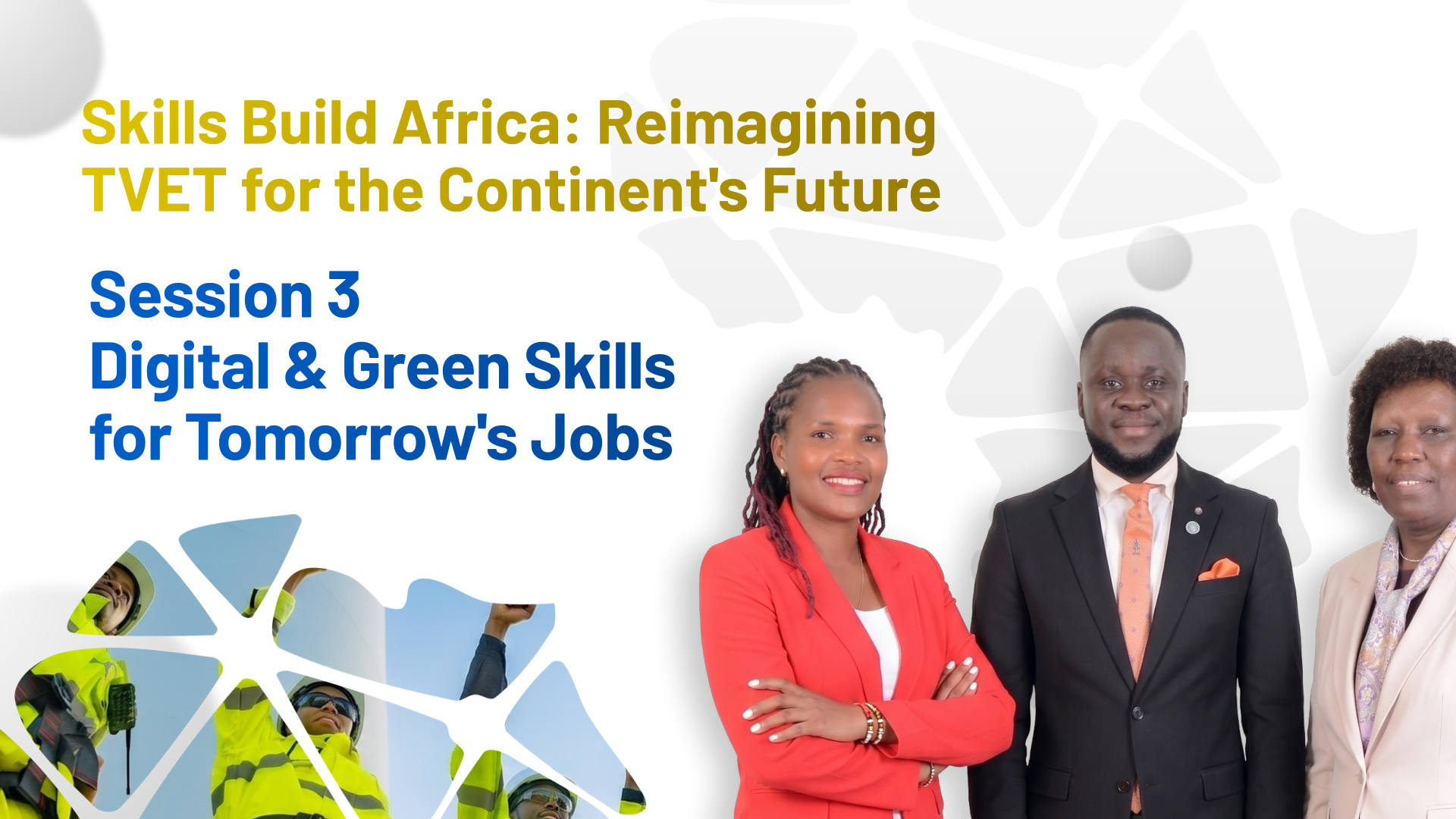
Skills Build Africa: Reimagining TVET for the Continent's Future — Session 3 Digital & Green Skills for Tomorrow's Jobs
Digital & Green Skills for Tomorrow's Jobs Moderated by Ing. Bismark Otoo, MEng, BSc, GhIE — Air Traffic Safety Engineer, Ghana Civil Aviation Authority. Speakers: Joyline Chepkirui — Digital Transformation Coordinator, State Department for TVET / Digital Learning TVET Trainer. Anne Kamonjo — Head of the Greening TVET and Climate Change Unit, State Department for TVET, Kenya. The energy transition and digital economy are creating jobs faster than training systems can fill them. This session identifies where the opportunities are emerging, and how technical education can move quickly enough to meet them. 25 August 2026, 2:00PM (GMT) · 4:00PM (SAST) · 3:00PM (WAT) · 5:00PM (EAT). Duration: 90 minutes.
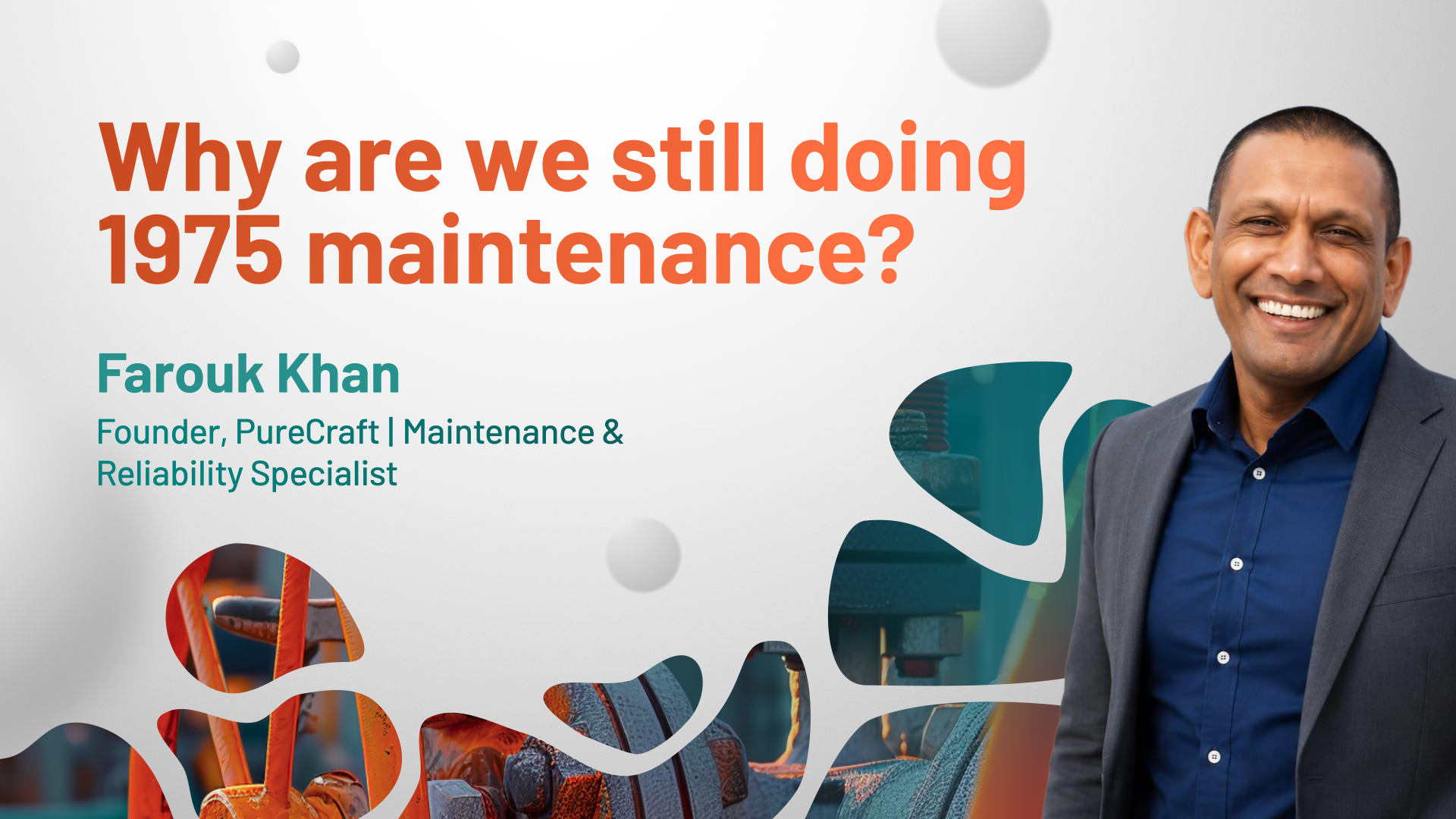
Reliability: A Strategic Capability
1975 called. Your maintenance strategy answered. Fixed intervals. Break-fix routines. Tribal knowledge locked in the heads of your longest-serving technicians. It's how most organizations still run reliability — and it's quietly costing them service delivery, budget, and public trust. Session 1 makes the case for a different mandate: reliability as an executive organizational capability, not a reactive repair task. See how modern maintenance replaces guesswork with proof — using connected operating evidence, onboard diagnostics, and fleet-wide learning to safeguard service delivery — and how the 8-step PureCraft™ reliability learning chain turns raw data into verified performance your board can trust. Series Details: Part 1 of an 8-Part Executive Learning Series Session Number: Session 1 of 8 Duration: 2 Hours (Discussion-led, including interactive Q&A) By the end of this session, you'll be able to: Reframe maintenance in your organization from a cost-centre task into the strategic capability that protects every service outcome you're accountable for. Shift your team's practices from calendar-based fixes to condition-informed, connected, evidence-based decisions. Apply the 8-step PureCraft™ reliability learning chain to convert raw data into verified service performance. This session is CPD Validated, live or on demand. A certificate is issued on completion.
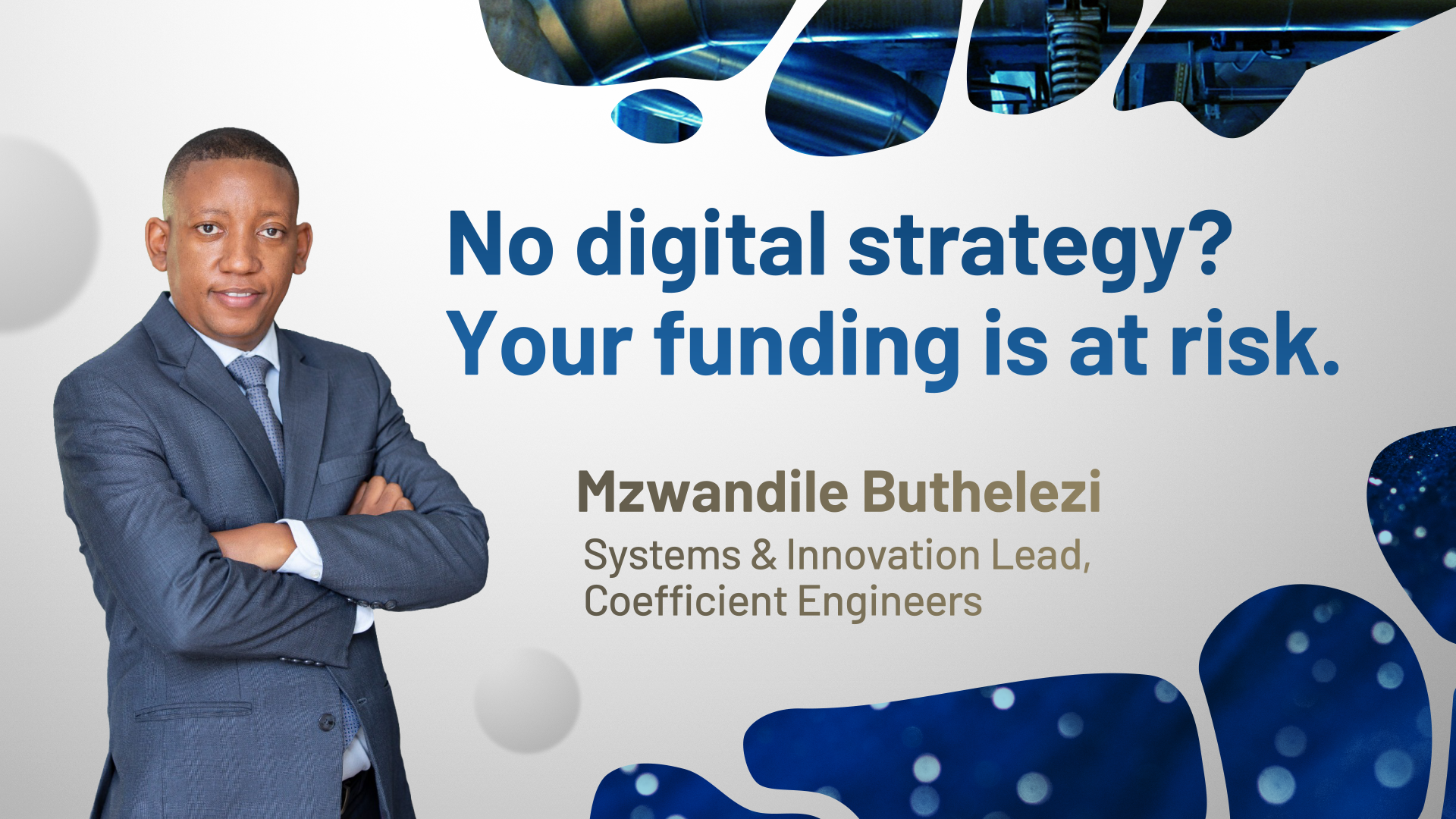
Digital Skills & Literacy for the Future of Water
Digital Skills & Literacy for the Future of Water Equipping Water Sector Leaders to Navigate, Govern & Leverage Digital Transformation With 40% of water lost through non-revenue water and climate stress pushing systems to their limits, traditional water management is no longer enough. Yet 45% of water utilities operate without a digital strategy, leaving leaders without the tools to make informed decisions. Digital transformation is not just an IT issue. It is an executive responsibility. This 2-hour interactive session, including Q&A, gives water sector leaders the practical digital literacy to evaluate technology, manage risk and make confident, informed investment decisions without the vendor hype. Presenter: Mzwandile Buthelezi Systems & Innovation Lead, Coefficient Engineers Professionally registered Electrical Engineer (ECSA, M.Eng) with 19+ years of experience in technology deployment, operational readiness and digital transformation. Key Takeaways Executive Data Literacy: Use 5 key questions and 5 data dimensions to identify unreliable data and make better decisions. Technology Risk: Assess AMI, SCADA and AI across technical, organisational, regulatory and financial risks. Digital & AI Governance: Apply 4 governance pillars to support POPIA, DWS and Blue/Green Drop compliance while managing AI risks. Workforce Roadmap: Use the 4 strategic talent levers, Build, Buy, Borrow and Bridge, to close digital skills gaps. Who Should Attend? C-Suite Executives, Municipal Water Directors, Utility Board Members, Operations & Engineering Leads, and Compliance Officers. Duration: 2 Hours, including Q&A CPD Accreditation: 0.20 ECSA CPD Credits (CPD Certificate issued upon completion)
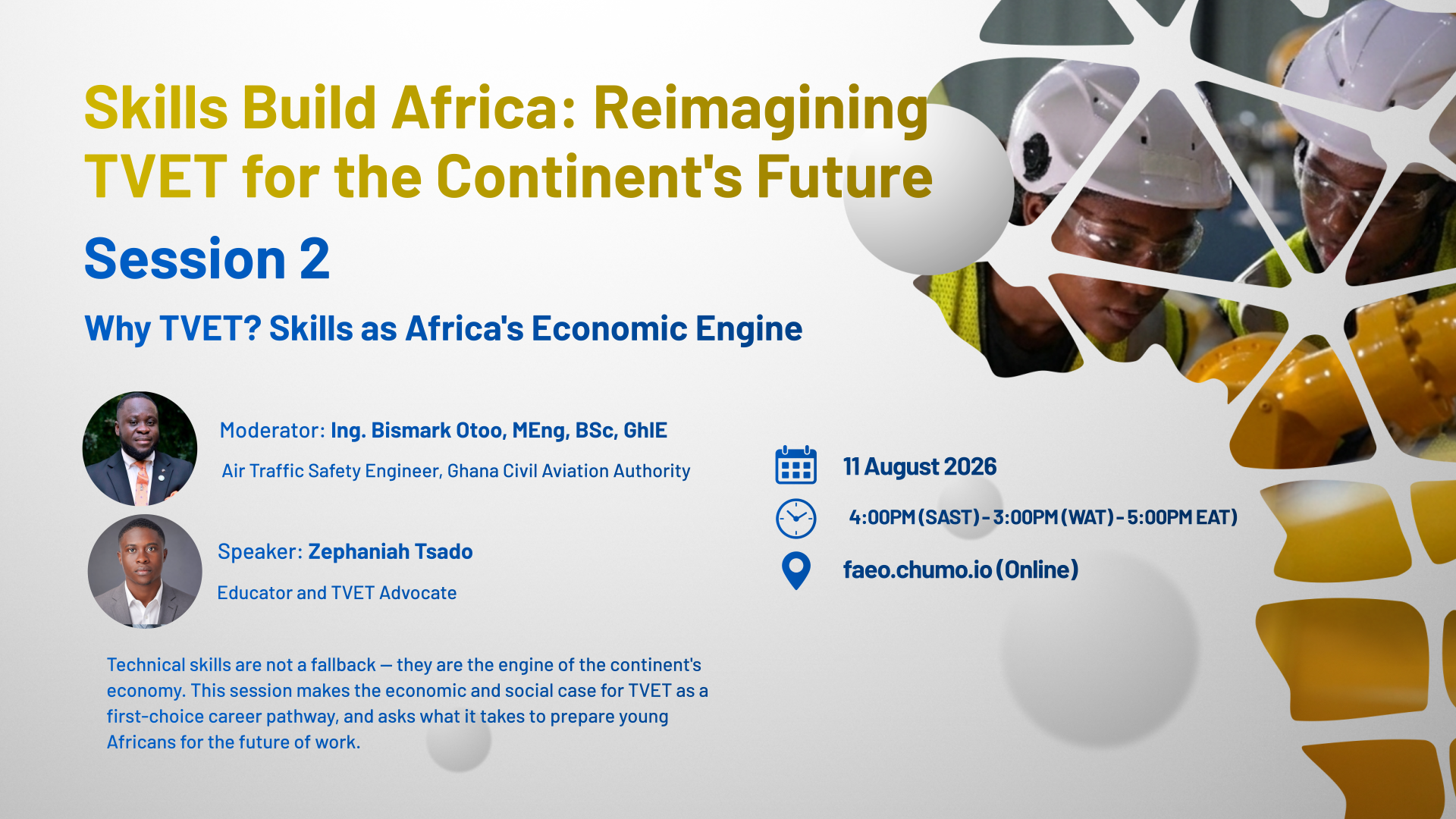
Skills Build Africa: Reimagining TVET for the Continent's Future — Session 2 Why TVET? Skills as Africa's Economic Engine
Why TVET? Skills as Africa's Economic Engine Moderated by Ing. Bismark Otoo, MEng, BSc, GhIE — Air Traffic Safety Engineer, Ghana Civil Aviation Authority. Speaker: Zephaniah Tsado — Educator and TVET Advocate. Technical skills are not a fallback — they are the engine of the continent's economy. This session makes the economic and social case for TVET as a first-choice career pathway, and asks what it takes to prepare young Africans for the future of work. 11 August 2026, 2:00PM (GMT) · 4:00PM (SAST) · 3:00PM (WAT) · 5:00PM (EAT). Duration: 90 minutes.
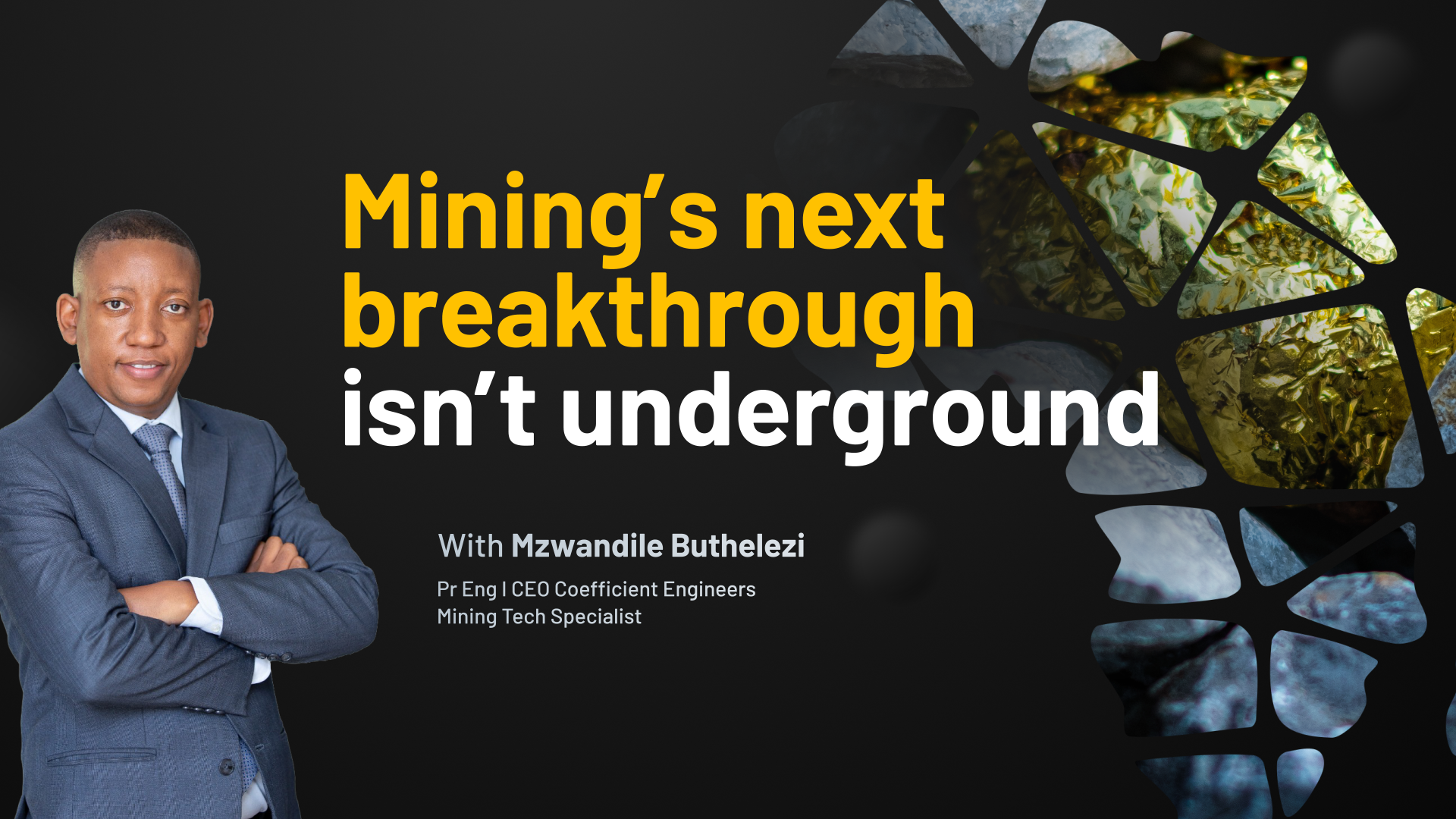
Digital Skills and Literacy for the Future of Mining
Equipping Mining Leaders to Read Data, Evaluate Technology and Govern Digital Investment Mining data is growing faster than most operations can use it. Sensors, fleet systems, condition monitoring and planning platforms generate more information every year, yet the decisions that data is meant to improve are still being made on instinct, on habit, or on a dashboard nobody has interrogated. Technology spend continues to rise while the capability to evaluate it lags behind. Digital transformation is not just an IT issue. It is an executive responsibility. This 2-hour on-demand session gives mining leaders the practical digital literacy to read operational data with confidence, evaluate new technology and vendors on their merits, assess adoption risk in a structured way, and connect digital investment back to strategy and capital allocation — without the vendor hype. Watch at your own pace, anytime. Presenter: Mzwandile Buthelezi Professional Engineer | Managing Director and CEO, Coefficient Engineers Mining Innovation and New Technology Specialist, working across technology deployment, operational readiness and digital transformation in the mining sector. Key Takeaways Practical Data Literacy: Read operational data critically, question what it is actually telling you, and act on it with confidence. Digital Tool and Vendor Awareness: Evaluate platforms and suppliers on capability and fit rather than on the pitch. Technology Risk Evaluation: Assess adoption risk across technical, operational, organisational and financial dimensions before committing. AI and Data Governance: Apply governance principles at board level to manage AI, data quality and accountability risks. Investment Alignment: Connect digital investment to strategy and capital allocation so technology spend can be defended like any other capital decision. Who Should Watch? Executives, Electrical and Electronics Engineers, Reliability Engineers, Mechanical Engineers, and Engineering Technologists working in or supplying the mining sector. Format: On demand, available anytime CPD: 0.20 ECSA CPD Validated credits (CPD Certificate issued upon completion)
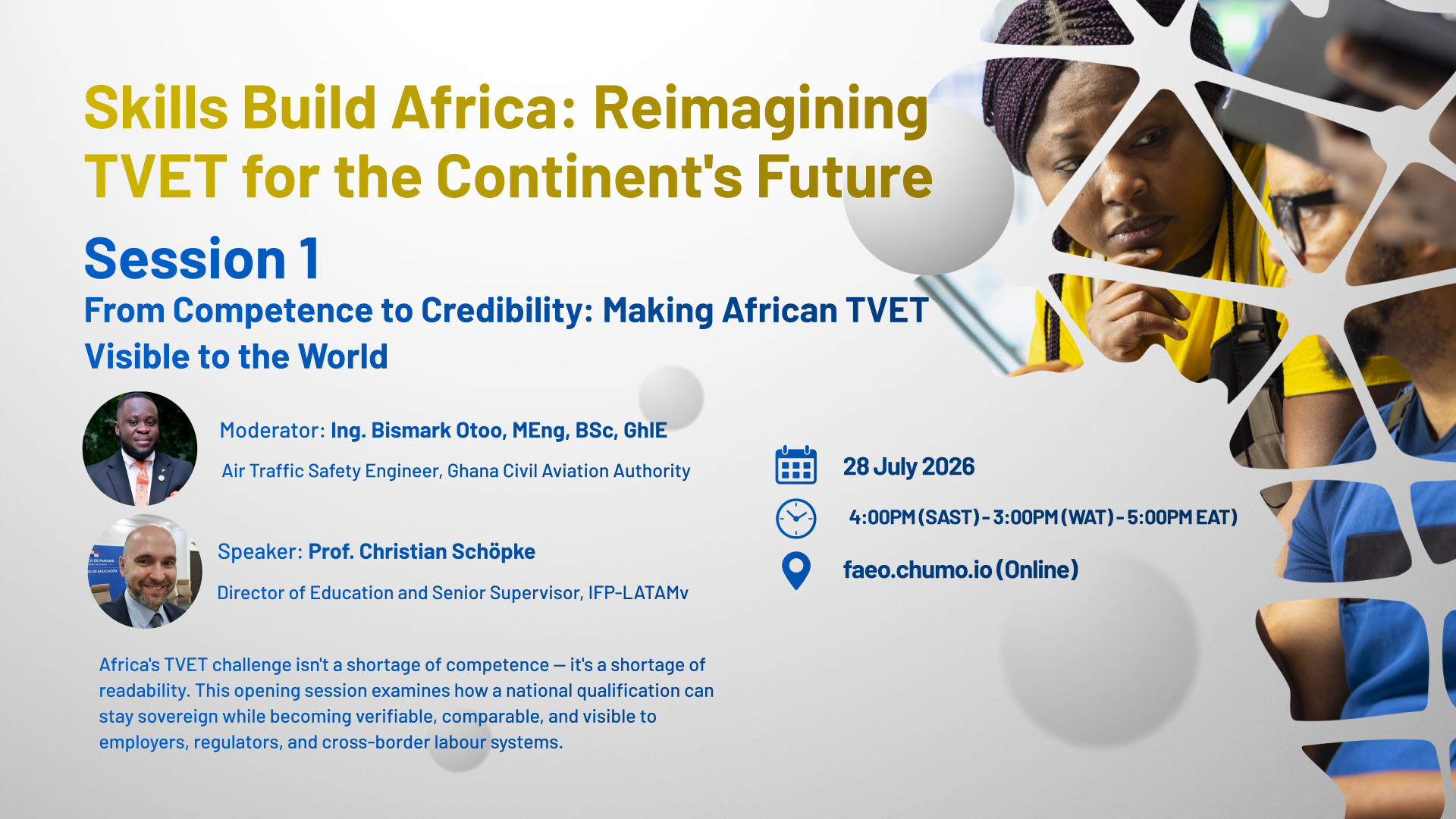
Skills Build Africa: Reimagining TVET for the Continent's Future — Session 1 From Competence to Credibility: Making African TVET Visible to the World
From Competence to Credibility: Making African TVET Visible to the World Moderated by Ing. Bismark Otoo, MEng, BSc, GhIE — Air Traffic Safety Engineer, Ghana Civil Aviation Authority. Speaker: Prof. Christian Schöpke — Director of Education and Senior Supervisor, IFP-LATAM. Africa's TVET challenge isn't a shortage of competence — it's a shortage of readability. This opening session examines how a national qualification can stay sovereign while becoming verifiable, comparable, and visible to employers, regulators, and cross-border labour systems. 28 July 2026, 4:00PM (SAST) · 3:00PM (WAT) · 5:00PM (EAT). Duration: 90 minutes.

Women in Engineering - March
Empowering women. Inspiring leadership. Advancing engineering. Women in Engineering is a flagship, CPD-accredited webcast series celebrating and empowering women in the engineering profession. Through inspiring leadership stories, technical expertise, and mentorship-driven conversations, the series highlights achievements, drives inclusion, and motivates future talent. Join the interactive session to ask questions, gain practical insights, and learn from leaders who are shaping a more equitable and innovative engineering landscape. This webcast provides both professional development and actionable inspiration.

The Ethics Connection - February
Real-world ethics. Tough decisions. Insights that shape smarter engineers. This interactive webcast explores real ethical challenges faced by engineers and how to navigate them with confidence and integrity. Join the conversation, ask questions, and engage with practical insights into ethical leadership, accountability, and regulatory expectations. This session is CPD accredited and designed to support responsible decision-making in everyday engineering practice.